

















Electrolytes are minerals such as sodium, potassium, chloride, calcium and magnesium that help keep the body functioning properly. We lose them every day through sweat, urine and normal body processes, with losses increasing when we are hot, physically active or on our feet for long periods.
If they are not replaced, it can affect hydration, energy levels and how the body performs day to day.
What do electrolytes do?
Electrolytes help to:
- keep you hydrated and maintain fluid balance
- support muscle function
- enable nerve signalling
- help regulate blood flow and blood pressure
- support metabolism and acid-base balance
Electrolytes can come from foods such as fruits, nuts, seeds and added salt, as well as from supplements. Most electrolyte marketing focuses on sport and exercise, but sweat losses are not limited to training.
You do not need to be an athlete to benefit from electrolytes. Everyday activity, long work shifts and hot environments can all increase your needs.
You may lose more electrolytes if you:
- work in a hot environment
- spend long periods on your feet
- commute, walk or move a lot throughout the day
- work outdoors
- naturally sweat heavily
So even if you are not training hard, electrolyte needs can still rise on hotter or more physically demanding days.
How many electrolytes are lost during exercise?
There is no one-size-fits-all answer. Electrolyte losses vary from person to person depending on body size, genetics, exercise intensity, duration and environmental conditions. However, researchers have studied sweat losses under controlled conditions to give us a useful guide.
In one study, recreationally active adults cycled for 90 minutes in a warm environment of around 30°C at both lower and moderate intensities.
Sweat losses
- Lower intensity (~45% VO₂max): ~0.86 litres of sweat
- Moderate intensity (~65% VO₂max): ~1.27 litres of sweat
Sodium losses
- Lower intensity: ~659mg sodium (~1.6g salt)
- Moderate intensity: ~1565mg sodium (~3.9g salt)
Reference: Eur J Appl Physiol. 2018 Dec 6;119(2):361-375.
Why does this matter? It shows that sweat and sodium losses are not fixed. They rise sharply as exercise intensity increases, which helps explain why electrolyte replacement can matter more on hot or physically demanding days, and why you often feel better and more energised after taking an electrolyte tablet.
It is worth noting that these results came from a warm lab during continuous cycling, so they do not directly reflect everyday conditions. What they do show is how quickly sodium losses can add up when conditions are hot or activity is sustained.
How can you tell if you are losing a lot of salt?
Most people are not measuring sweat rate or sodium losses in a lab, but some practical signs can suggest higher sweat sodium losses:
- salt marks on skin or clothing
- sweat that tastes very salty or stings your eyes
- muscle cramping during or after sweating
- feeling lightheaded when standing up quickly
- craving salty foods after a long hot day
fourfive’s approach: moderate sodium, easier to personalise
As electrolyte needs vary so much from day to day, choosing a product with a moderate amount of sodium can make more sense than taking a very high-dose formula by default.
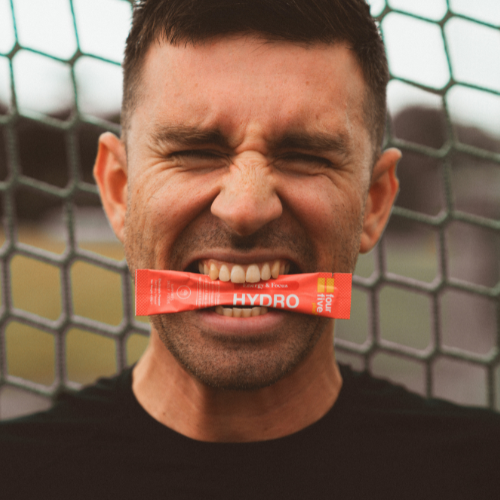
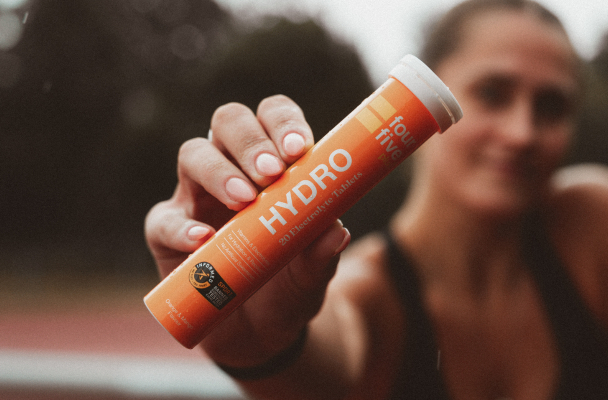
Some electrolyte products deliver very large sodium doses in one serving - products containing 1g of sodium contributes to nearly 50% of your daily salt intake! fourfive Hydro uses a more moderate sodium level per serving, making it easier to adjust intake based on how much you are actually sweating that day.
| Product | Sodium | Salt equivalent | Daily max contribution |
|---|---|---|---|
| Creatine + Electrolytes | 245mg | 0.61g salt | ~10% |
| Hydration tablets | 250mg | 0.63g salt | ~10% |
| Hydration sachets | 280mg | 0.70g salt | ~12% |
This means you can scale up or down depending on your needs:
- Lower sweat day: 1 serving may be enough
- Hot working day or more sweating: 1-2 servings may be more appropriate
- Very sweaty training or long hot shifts: needs may increase further depending on total sweat losses
Who should be cautious with electrolytes?
Electrolyte supplements are not suitable for everyone. People who are pregnant, have kidney disease or take certain blood pressure medications should speak to a healthcare professional before using them.
Electrolytes still count towards your daily salt intake
In the UK, the NHS recommends no more than 6g of salt per day, which is about 2.4-2.5g of sodium. However, average adult intake is around 8.4g per day, which is roughly 40% above the guideline.
Because of this, electrolyte products should be used mindfully and in the context of your overall dietary salt intake that day.
Most people do not track salt intake closely, but eating high amounts of the following foods can be a sign that intake is already on the higher side:
- bread
- breakfast cereals
- cheese
- canned soups
- sauces such as soy sauce, ketchup and gravy
- processed meats such as bacon, ham and sausages
- pastries, pizzas, biscuits and cakes
- takeaways and ready meals
- adding salt to meals
How to add flavour without relying on salt
Try using:
- lemon or lime juice
- black pepper
- chilli
- garlic
- vinegar
- fresh herbs such as parsley, coriander, basil and mint
- dried herbs and spices such as paprika, cumin, oregano and rosemary
Quick guide
- Low activity or cooler day: 1 serving
- Moderate activity or warm day: 2 servings
- High sweat or long hot day: 2-4, adjust intake based on how much you are losing
Electrolytes are essential, but more is not always better. What matters is getting the right amount for your day, your environment and your sweat levels.
A moderate, flexible approach like fourfive’s makes that easier to personalise.


