

















Tinnitus can be frustrating to live with. The constant ringing, buzzing or humming in the ears affects millions of people, and for many there’s no simple fix.
Recently, functional mushrooms like lion’s mane and reishi have started appearing in conversations around tinnitus support. But what does the research actually say?
Here’s the honest answer.
Lion’s Mane and Tinnitus
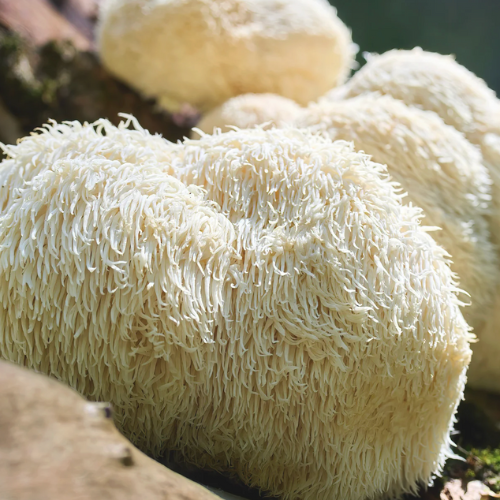
There are currently no direct clinical trials studying lion’s mane for tinnitus. But the mushroom is one of the most studied natural ingredients when it comes to brain and nerve health — and that’s where things become interesting.
Lion’s mane contains unique bioactive compounds called erinacines and hericenones. These compounds have been shown to stimulate nerve growth factor (NGF), a protein that plays a key role in the survival, repair and regeneration of neurons.
This matters because tinnitus is often linked to damage or dysfunction in the auditory system — particularly the nerves that carry sound signals from the ear to the brain.
A 2022 double-blind randomised study involving 80 adults aged 50–79 found that lion’s mane supplementation improved hearing loss in older participants. Researchers suggested the improvement may be linked to increased nerve growth factor production and support for neuronal repair.
The auditory nerve itself hasn’t yet been the direct focus of tinnitus-specific trials. But the underlying mechanisms — nerve regeneration, reduced neuroinflammation and antioxidant protection — point in a scientifically credible direction.
Reishi and Tinnitus
Reishi has been used in East Asian medicine for centuries, often for resilience, immunity and overall wellbeing.
Modern research is increasingly focused on its anti-inflammatory and antioxidant properties. These are highly relevant to tinnitus because inflammation and oxidative stress are thought to play a role in damage within the inner ear.
Some research also suggests reishi may help support healthy microcirculation. Better blood flow could theoretically improve oxygen delivery to the delicate structures of the inner ear — something researchers believe may influence tinnitus severity.
Direct clinical studies on reishi and tinnitus are still limited. But the broader research around inflammation and circulation continues to grow.
The Honest Picture
The link between functional mushrooms and tinnitus is promising, but it’s still early.
Lion’s mane currently has the strongest case thanks to its neuroprotective effects and its ability to stimulate nerve growth factor. Reishi offers well-documented anti-inflammatory and circulatory support that may also be relevant.
What neither mushroom is, however, is a cure. Anyone claiming that isn’t being straight with you.
But if you live with tinnitus and you’re looking at your health more broadly — sleep, stress, inflammation and nerve health — functional mushrooms are worth understanding.
Not as a quick fix. As part of a wider approach that supports the systems your body relies on.
Like most nutritional interventions, the effects tend to be gradual and cumulative. Consistency matters. Taking functional mushrooms daily over months, rather than days, is where most people tend to notice meaningful changes.
If you decide to try them, look for products that:
- Use the full fruiting body rather than just mycelium
- Are third-party tested for purity and potency
- Are transparent about exact ingredients and dosages
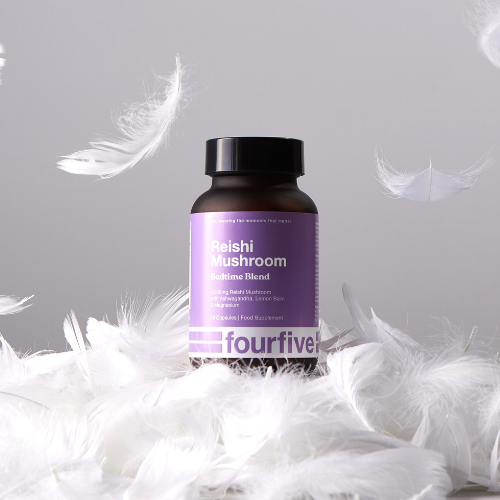
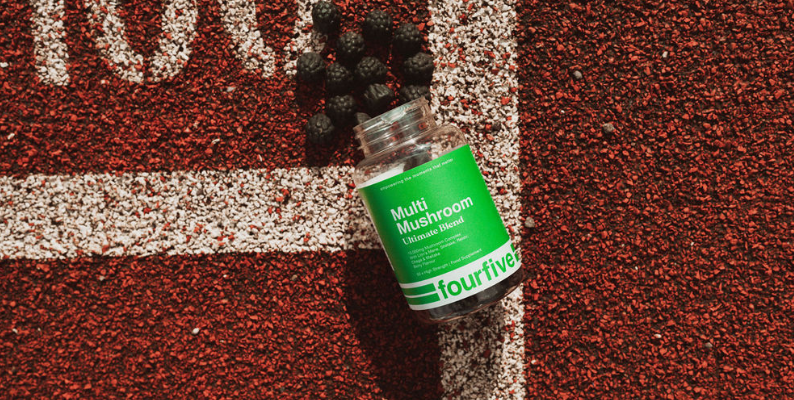
fourfive Multi-Mushroom Supplement 10,000mg

If you experience tinnitus, speak to your GP or an audiologist. This article is for informational purposes only and does not constitute medical advice.


